
Amyotrophic lateral sclerosis (ALS) is a progressive neurodegenerative disease characterized by motor neuron degeneration. In recent years, metabolic abnormalities and alterations in energy metabolism have also been recognized as contributing factors to disease pathology. Weight loss is a well-established prognostic factor in ALS. Although enteral nutrition (EN) is commonly introduced to address dysphagia and malnutrition, it has remained unclear whether caloric intake or weight change is more important for survival after EN initiation.
In this study, we retrospectively analyzed 121 ALS patients who received enteral nutrition. We examined the relationship between caloric intake at the initiation of EN, subsequent changes in body weight (BMI), and survival.
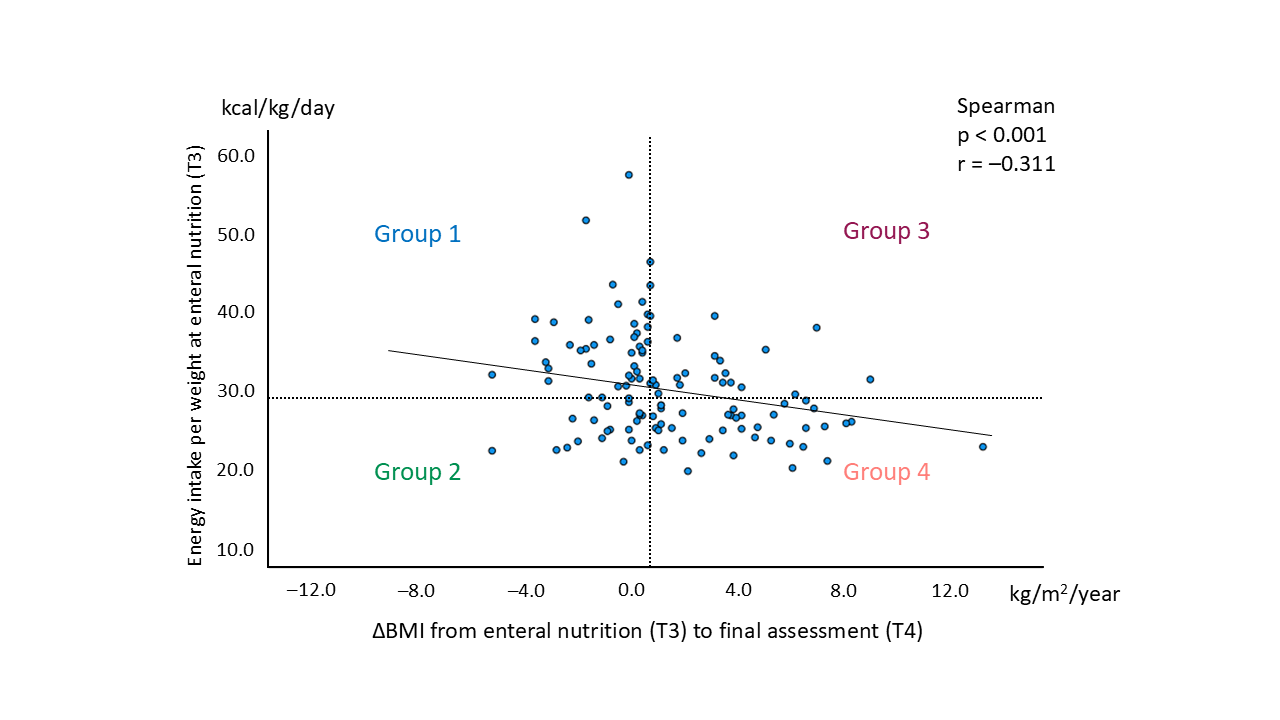
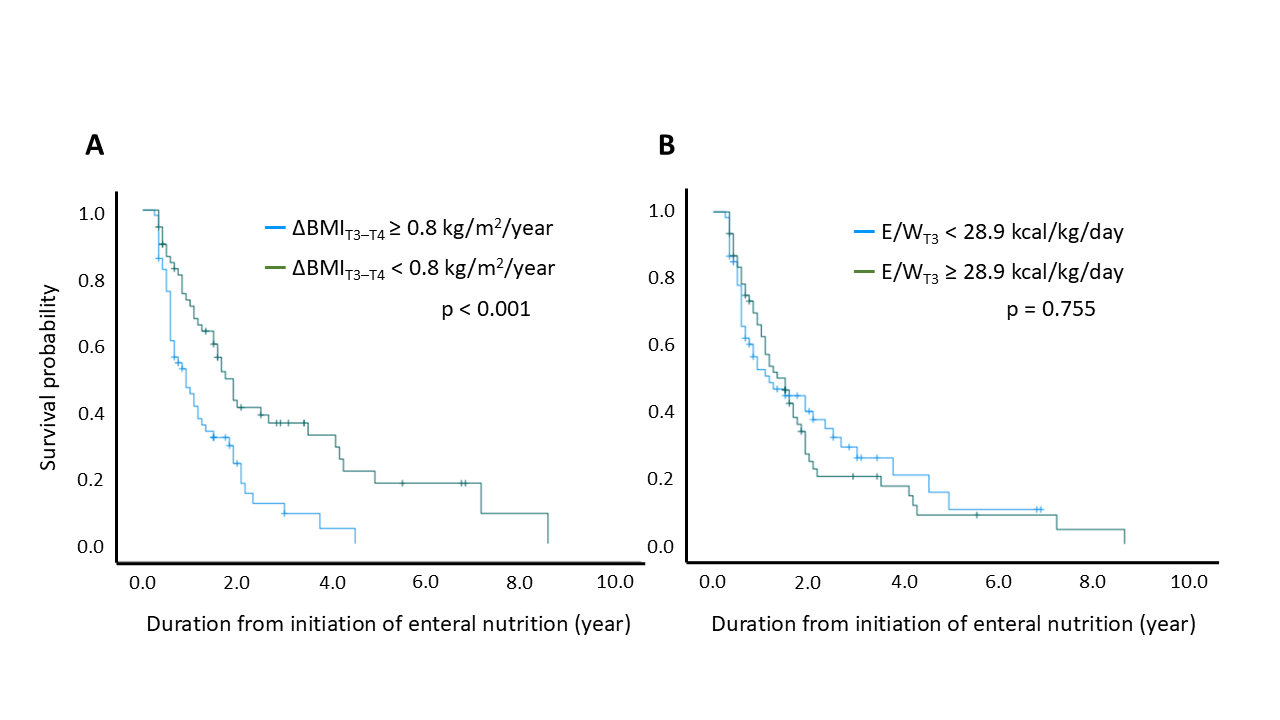
The results demonstrated that patients with less weight loss after EN initiation had significantly longer survival (Fig. 2). In contrast, caloric intake at EN initiation was not independently associated with survival (Fig. 2). Additionally, higher caloric intake was associated with reduced weight loss (Fig. 1).
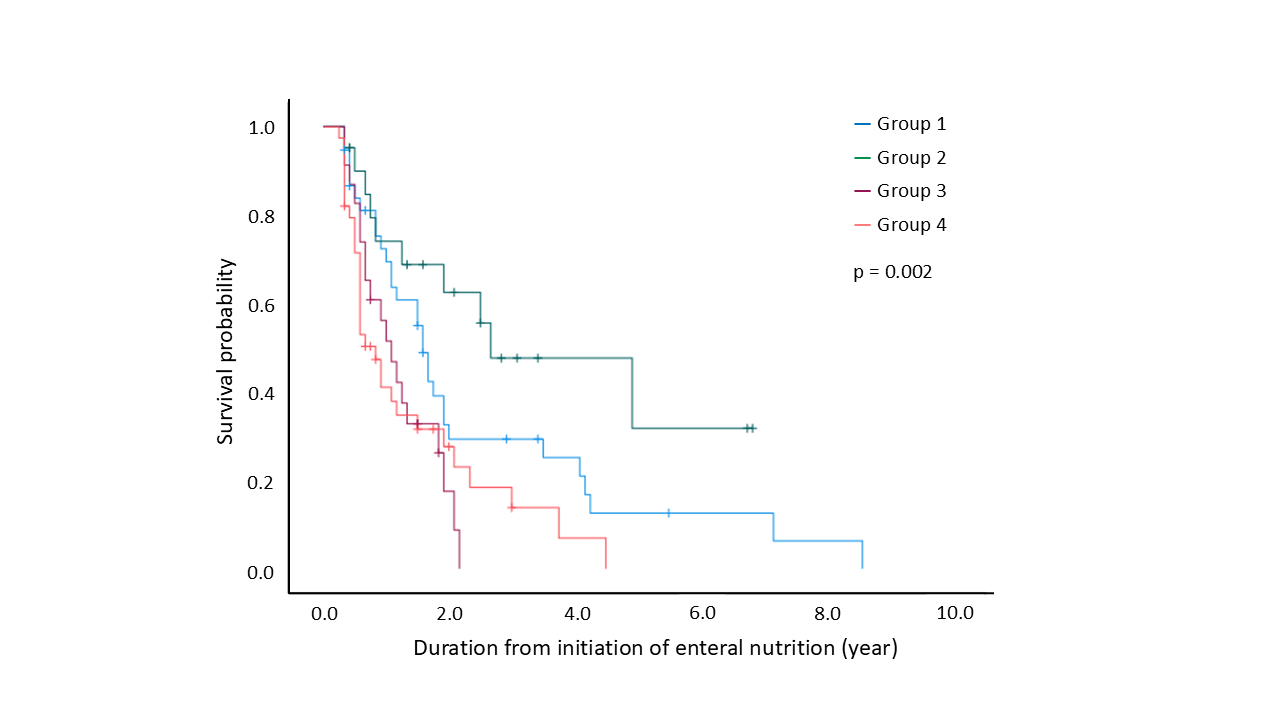
This study suggests that, in the nutritional management of ALS patients, maintaining body weight may be more important for prolonging survival than simply increasing caloric intake. In the future, individualized nutritional management tailored to each patient’s disease progression and metabolic status will be essential. Additionally, body weight change may serve as a useful indicator for evaluating treatment effects.
This study was supported by JSPS KAKENHI (Grant Numbers: 23K24656, 23K09948).
This study provides important clinical insights into nutritional management in ALS and suggests a potential shift in therapeutic goals from increasing caloric intake to maintaining body weight. The findings are directly applicable to clinical practice in nursing and nutrition management and highlight the importance of multidisciplinary care in rare diseases. The study holds significant clinical and social value and is suitable for dissemination as evidence in the field of intractable disease care.
