
TOKYO, Japan — A personalised home-visiting programme developed with young mothers was associated with better fulfilment of psychosocial needs and fewer symptoms of postnatal depression among first-time mothers aged 16–25, according to a study published in *BMJ Mental Health*.
The Early Partnership programme combined sustained relationship-based support, practical assistance and coordinated multidisciplinary care from pregnancy until 12 months after childbirth. Compared with young mothers receiving standard publicly funded maternal and child health services, participants in the programme reported improvements that were maintained at both six and 12 months after childbirth.
The programme was developed by the Tokyo Metropolitan Institute of Medical Science and the Tokyo Metropolitan Government, drawing directly on the experiences of women who had become mothers during adolescence or young adulthood.
Young mothers can face overlapping challenges, including financial insecurity, social isolation, stigma and difficulties accessing services.
Conventional maternal health services often use screening and risk assessment to identify families requiring additional support. Although these assessments are important, an approach perceived as judgemental or stigmatising may discourage mothers from discussing their needs or continuing to engage with services.
To address this problem, the research team co-designed Early Partnership with women who had experienced pregnancy and childbirth at a young age.
Their experiences informed both the content and delivery of the programme.
“Many young mothers told us that conventional risk assessments made it difficult for them to speak openly about the problems they were actually facing,” said lead author Kaori Baba of the Tokyo Metropolitan Institute of Medical Science.
“We therefore started not with the question ‘What is wrong?’ but with ‘What does this mother need in order to feel secure and move forward with her life?’ A key feature of Early Partnership is that young mothers’ experiences shaped both what support was provided and how it was delivered.”
Rather than defining participants primarily in terms of risk, family support workers sought to understand each woman’s individual circumstances, priorities and aspirations. Workers were trained to establish non-stigmatising relationships in which mothers could discuss sensitive issues without feeling blamed or shamed.
Each participant was assigned a family support worker who provided continuous support from pregnancy through the child’s first year. Support was delivered through home visits, face-to-face meetings, telephone calls and online consultations. Participants received an average of approximately 54 contacts.
Family support workers were part of multidisciplinary teams that included public health nurses, social workers, psychologists and parenting-support professionals. Maternal and child health services and child welfare services worked together as a single support team.
A central focus of the programme was whether mothers felt that they had sufficient resources in five areas: time, money, physical health, emotional health and life overall.
The researchers use the Japanese concept of yutori to describe this sense of having enough practical, emotional and financial room to manage daily life. Rather than referring simply to leisure time, yutori reflects whether important needs are being met and whether a person feels able to make meaningful choices about her life and future.
Support was tailored to each participant. For example, when a mother was experiencing financial difficulties, the family support worker could help her review household income and expenditure, develop a cash-flow plan, identify relevant benefits and services, and take practical steps to access them.
“Our findings show the importance of understanding what each mother needs and providing support through a trusting relationship, rather than assessing her solely in terms of risk,” said co-corresponding author Syudo Yamasaki of the Tokyo Metropolitan Institute of Medical Science.
“In this study, yutori does not simply mean having more free time. It refers to having sufficient time, money, physical and emotional wellbeing, and overall life resources—and feeling able to make choices about one’s life and future. Support addressing these wider aspects of daily life may also have contributed to the reduction in postnatal depressive symptoms.”
The study included 309 first-time mothers aged 16–25 from four municipalities in Tokyo. Of these, 151 received the Early Partnership programme, while a historical comparison group of 158 received standard publicly funded maternal and child health and social services.
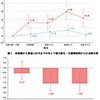
At six months after childbirth, mothers who received Early Partnership showed a 4.16-point greater improvement on a 50-point measure of fulfilled psychosocial needs than mothers in the comparison group. At 12 months, the difference was 3.93 points.
Postnatal depressive symptoms, measured using the 30-point Edinburgh Postnatal Depression Scale, were also lower among mothers who received Early Partnership. Average scores were 1.54 points lower at six months and 1.55 points lower at 12 months than in the comparison group.
Retention was high in both groups: 82.1% of participants receiving Early Partnership and 82.9% of the comparison group remained in the study at 12 months.
The researchers used target trial emulation, an analytical approach that uses observational data to approximate the design and analysis of a hypothetical randomised trial.
“Randomised controlled trials are not always feasible when evaluating programmes delivered through routine municipal services,” explained co-corresponding author Zui C. Narita, who led the analytical component of the study.
“We therefore specified in advance the eligibility criteria, interventions being compared, follow-up period, outcomes and analytical strategy in an effort to emulate a randomised trial as closely as possible. We also adjusted for measured differences between the intervention and comparison groups and conducted a range of sensitivity analyses to assess the robustness of the findings.”
Narita added: “Nevertheless, participants were not randomly assigned, and the two groups were recruited during different periods. We therefore cannot completely exclude the effects of unmeasured confounding or changes over time. Further evaluation in other settings and populations will be important.”
The study is notable because young mothers were involved in co-designing the programme. Their lived experiences shaped the programme’s priorities, communication methods and approach to building trust.
“Young mothers should not be viewed simply as people who need to be assessed or managed,” said Atsushi Nishida of the Tokyo Metropolitan Institute of Medical Science, who led the overall research programme.
“They are active partners with the capacity to make decisions about their own lives and their children’s futures. The next important step is to ensure that the findings are not confined to a single research project, but become embedded in routine municipal services through sustained collaboration between maternal and child health and child welfare services.”
The findings suggest that a person-centred and relationship-based model embedded within public maternal and child health services may help reduce unmet psychosocial needs and postnatal depressive symptoms among young first-time mothers.
Following the programme’s development and evaluation, the Tokyo Metropolitan Government has introduced an initiative to strengthen integrated child and family support centres across all municipalities in Tokyo. The Early Partnership approach is expected to contribute to the development of evidence-based, non-stigmatising maternal and family support services.
The study was supported by the Tokyo Metropolitan Government’s Preventive Support Promotion Tokyo Model Project and its initiative to strengthen integrated child and family support centres; Grants-in-Aid for Scientific Research from the Japan Society for the Promotion of Science; a Health, Labour and Welfare Sciences Research Grant; the Japan Science and Technology Agency’s Moonshot Research and Development Program and Research Institute of Science and Technology for Society; and the Wellcome Trust.
